Parlor Palm
Botanical Name: Chamaedorea elegans
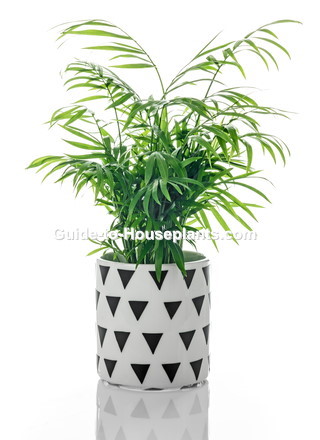
Parlor palm is a popular house plant and easy to care for. Although the Palmae family is large, only a few make good house plants. Chamaedorea elegans is one of those few, adapting beautifully to average indoor conditions.
It has elegant, green leaflets on arching fronds, giving this palm a feathery, canopy shape.
Given enough light, a mature plant may produce sprays of small yellow flowers on tall stalks above the foliage. The flowers are followed by seeds that are rarely fertile and not worth saving, so just cut the flowers off when they begin to turn brown.
Green Thumb Tip
Do not prune. Parlor palm grows from a terminal bud. Pruning this single point of growth will cause it to stop growing. However, it's fine to trim off old fronds that have turned brown.
Repot in spring, only when the roots have filled the pot. Always use a pot with drainage holes to prevent soggy soil, which can cause root rot. If you want to cover a plain nursery pot, slip it into a cachepot -- a decorative planter without drainage holes. I put small river stones in the bottom of my cachepots to keep the inner pot above the drainage water.
Brown leaf tips can be caused by dry air or tap water that contains fluoride. Increase humidity around the palm, if too dry. Use distilled or rain water.
Black spots on leaves indicate fungal disease. Cut off affected leaves and set your palm where it will get air circulation. Black stems? Over-watering. (See "Water" below.)
Yellow spots on leaves may indicate a lack of nutrients (see "Fertilizer" below). Or a sign of a spider mite infestation, though you'll likely notice the fine webbing between stems first. Isolate any infested plant and treat it right away.
This is one of the few palms that grows well in low light. Its tolerance for lack of light and moderate humidity make it an ideal office plant. And did you know it's good for you? Parlor Palm is one of the top-rated houseplants for removing toxins such as formaldehyde and ammonia from indoor air.
Buying Tip
You'll commonly find this plant labeled as Neanthe bella. Slow-growing, they're usually sold as young plants around 1 ft (30 cm) tall. Ideal for dish gardens and terrariums because they'll stay small for years and won't crowd other plants.
Parlor Palm Care Tips
Origin: Mexico and Guatemala
Height: Slow-growing. Fully mature plants may reach 3-4 ft (90 cm - 1.2 m).
Light: Low light to moderately bright light. If leaves are yellowish-green, this palm may be getting too much sunlight. Parlor palms grow well under fluorescent light, making them popular office plants.
Water: Water thoroughly, allowing the top 2-3 inches (5-8 cm) to dry out before watering again. Use a pot with drainage holes to prevent root-rot. Leaves and stems that turn black are caused by over-watering. Cut any affected black stems off at the soil level and water less often. Houseplants need less water in the winter because growth is slower.
Humidity: Although this palm will tolerate dry indoor air, it will be healthier with 40-50% relative humidity. Mist the foliage regularly or set the pot on a humidity tray, if needed. I mist mine a few times a week with room-temperature water. Misting also keeps its leaves clean and helps to prevent spider mites that may attack this plant.
Temperature: Warm room temperatures (65-80°F/18-27°C) year-round. Keep your parlor palm away from heat/AC vents and cold blasts from doors in the winter months.
Soil: 2 parts peat moss-based potting mix and 1 part sharp sand.
Fertilizer: Needs more fertilizer than most palms. Feed monthly in spring and summer with a slow-release fertilizer specially made for indoor palms. Yellow spotted or streaked leaves are a symptom of potassium or magnesium deficiency. Pale leaves may indicate it's suffering from iron deficiency. You can revive it quickly with a foliar fertilizer spray that includes iron.
Propagation: Can be grown from seeds, but they are slow to germinate and grow into a good-sized plant.
More to Explore


-
3 Succulents to Add Whimsy to Any Room
Apr 29, 25 02:38 PM
- Give rosette-shaped Paddle Plant a whirl. This low-maintenance gem adds bold texture to your indoor jungle.
- Let String of Bananas trail from a hanging basket and enjoy this captivating succulent at eye…
-
Indoor Plant Stands - Decorative Solutions for House Plants
Apr 28, 25 01:44 PM
 Indoor plant stands are an attractive, practical way to show off your prized plants. Discover new ideas for displaying house plants with stylish plant stands.
 -
Gerbera Daisy Care: Gerbera Jamesonii House Plant
Apr 27, 25 04:27 PM
Gerbera daisy care is easy. Just put a pot of gerbera flowers on your windowsill and they'll brighten up any room. Get tips for caring for gerbera daisies.