Indoor Hydrangea Care
Botanical Name: Hydrangea macrophylla
Good hydrangea care includes cool air, bright light and moist soil. Give them what they want and you'll be rewarded with a long blooming season of spectacular beauty.
Put a potted hydrangea on a dining table, in a sunroom or anywhere you want to add instant garden ambiance.
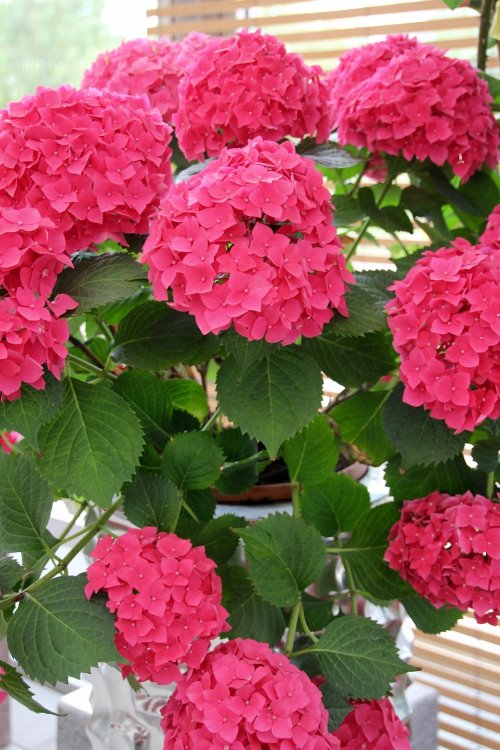 Image by Peggy und Marco Lachmann-Anke
Hydrangea Varieties to Grow as Houseplants
Dozens of species exist. The best for growing indoors is Hydrangea macrophylla -- the mophead hydrangea, which offers hundreds of varieties.
This is a plant that really knows how to show off. Big, round clusters of small flowers cover mophead hydrangeas all summer in blue, violet-blue, white, pink or red. New cultivars are introduced with bi-colored blooms, and in more vibrant colors than we've ever seen.
Hydrangea 'Endless Summer' produces an abundance of pale-blue blooms. It's one of the hardiest -- good to know if you live in a cold climate and plan to move your plant outdoors.
More popular varieties include violet-blue 'Nikko Blue', deep-blue 'All Summer Beauty' and snowy white 'Libelle'.
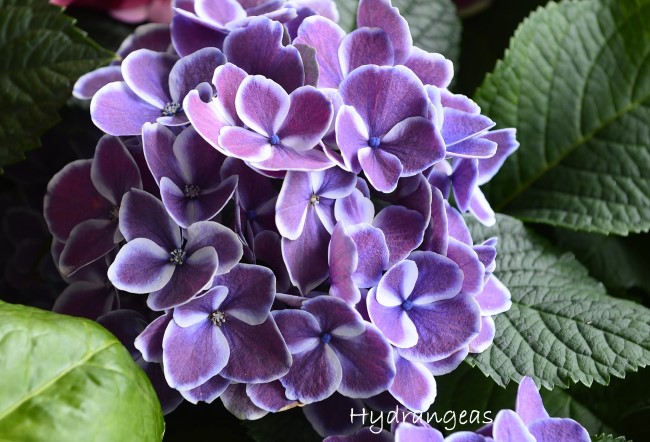 New varieties make the prospect of growing hydrangeas indoors quite tempting.
Hydrangea Care and Maintenance
Keep the soil moist. Dry soil can be the death of this plant. Leaves that turn yellow and fall off are a sign of dry soil. Flowering plants are thirsty, so it's a good idea to check the soil every day while in bloom.
Hydrangea pruning. Mophead hydrangeas don't need to be pruned back unless you want to control their size. Cutting off about 1/3 of the oldest stems will give you a fuller plant. When to prune hydrangeas: After blossoms fade. Hydrangea shrubs are perennials. Woody stems are densely covered with big, oval leaves that are deep green.
Pruning Hydrangea Care Tip
When pruning hydrangea, care should be taken not to tear the stems, which can damage the plant. Use clean, sharp pruners to cut the stem at a 45° angle, 1/4-inch after a leaf axle.
Overwintering your plant. Hydrangea shrubs are perennials. If you intend to keep your plant, repot after flowering is over and cut the woody stems back by half. Water sparingly in winter. Keep the plant cool during the winter, then move it to warmer conditions in late winter to help bring it into bloom.
If you meet the needs for hydrangea care, you can count on it to bloom year after year.
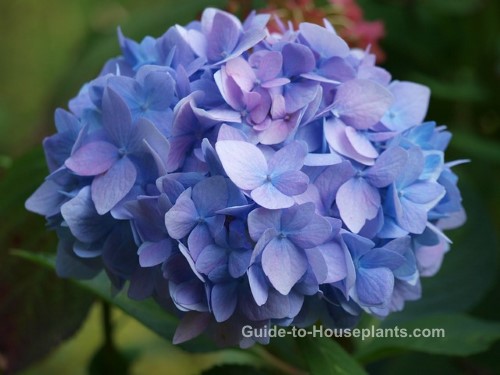
How to Keep Blue Hydrangeas Blue
Blue hydrangeas need acidic soil (pH 5.5 and lower) or they will change flower color from blue to pink. Alkaline soils (higher than pH 7) are fine for pink varieties. To keep the blue color, add sulphur while the plant is blooming. Neutral pH (between pH 5.5 and pH 7) can make the flowers purple or a mix of pink and blue.
It's important to know that not all cultivars can change to blue, so buy the color you want and try to maintain it. It's much easier to maintain a color than to change it completely by experimenting with soil acidity. Besides, some varieties won't change no matter what you do.
How to Preserve Your Mophead Hydrangeas
Drying Hydrangeas. Hydrangea color will be best preserved by allowing the flower stem to dry on the plant. Cut them off when the flowers have a papery feel, with a stem length suitable for a vase, centerpiece, or whatever flower arrangement you choose.
Strip off all leaves, and then find a dark, dry room where the flowers can finish drying. Hang the stems upside down while drying to prevent them from bending. Keep the flower stems separate as they dry so that none of the flowers get squashed.
Mopheads are among the most beautiful dried hydrangeas, turning soft shades of blue, green, violet or rose.
Indoor Hydrangea Care Tips
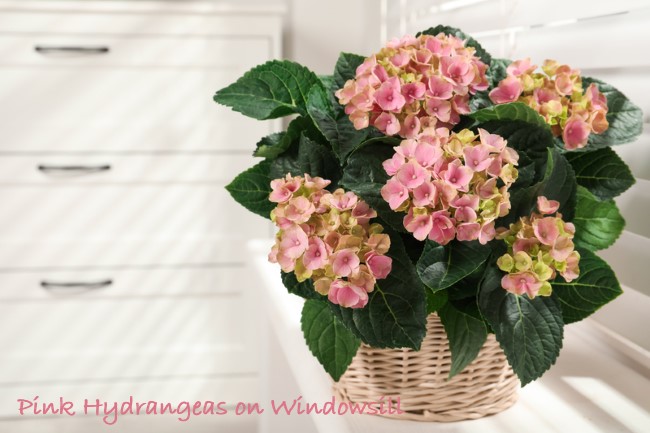 Give mophead hydrangeas plenty of bright light to bloom. Photo © Chernetskaya
Origin: Japan
Height: 2 ft (60 cm) indoors
Light: Provide at least 4 hours of bright, indirect light every day.
Water: Keep the soil evenly moist, but not soggy while plant is growing and flowering. Pots are usually packed tightly with roots, so water often. Use lime-free water because lime will make the soil alkaline. Water sparingly in winter, when hydrangea is resting.
Humidity: Average room (around 40-45% relative humidity). If your indoor air is dry, use one of these easy ways to increase humidity for your houseplants.
Temperature: Keep your hydrangea plant as cool as possible to prolong the flowering time. Preferably below 60°F/16°C.
Soil: Peat-based acidic lime-free soil for blue varieties. Alkaline soil for pink.
Fertilizer: Feed every 2 weeks in spring and summer with a balanced fertilizer (such as 10-10-10) diluted by half. Or, use a slow-release fertilizer once in spring and again in summer. Go easy -- too much fertilizer may scorch its leaves.
Propagation: Take 4 inch (10 cm) stem tip cuttings in spring or early summer and root them in moist potting mix.
More to Explore


-
Mandevilla Plant Care, Tips for Growing and Training Mandevilla Vine
May 05, 24 11:06 AM
 Tips for growing Mandevilla plant in a container. Find out how to coax flowers year after year. How to train Mandevilla vine on a trellis.
 -
Grow Muehlenbeckia Complexa Indoors (Angel Vine, Maidenhair Vine)
May 02, 24 02:17 PM
 Whether you train Muehlenbeckia complexa on a trellis, or allow it to trail, you'll love easy-care Angel Vine aka Maidenhair Vine as a houseplant.
 -
Anthurium Clarinervium Care: How to Grow this Houseplant
Apr 28, 24 11:07 AM
 Anthurium clarinervium sports decorative, heart-shaped leaves, giving this houseplant a stunning style all its own. Find out how to grow this beauty indoors.