How to Make a Terrarium
If you've ever wondered how to make a terrarium -- or thought it would be difficult to do -- you'll be amazed at how easily it comes together with these simple, step-by-step tips.
Start with a clean, dry container and new, unused supplies. It's the surest way to avoid contaminating plants with fungi and diseases. You don't want to start off your terrarium with these problems.
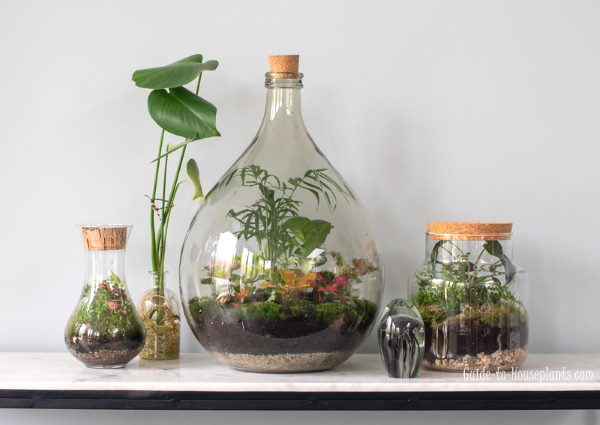 Make your terrarium anything you want it to be. Photo © Maarten Janssen
Terrarium Supplies You'll Need
- Container
- Pebbles or aquarium gravel
- Horticultural charcoal
- Sphagnum peat moss
- Potting mix
- Plants
Whether you choose a candy jar or a fish tank, your miniature garden can be completely enclosed or open at the top. Open terrariums allow better air circulation around the plants, and therefore have fewer problems with disease. Plants in open terrariums do need watered more frequently than enclosed terrariums.
Terrarium plants enjoy high-humidity because they are at least partially enclosed in glass, which traps moisture around the plants.
Choosing Your Container
Before you learn how to make a terrarium, you'll need to find a suitable container. You have a wide range to choose from, including goldfish bowls, jars, bottles, aquariums, even large brandy glasses.
Just about any type of container will work, as long as it is clear glass or plastic. Tinted glass will filter sunlight and prevent the plants from getting the light they need to grow.
Green Thumb Tip
Find a good location for your terrarium. Light and temperature play an important part in how well your plants will thrive.
Most plants need to be near a window, but not in direct sun which will scorch the plants. If you don't have an area within a few feet of a south- or west-facing window, you can use artificial lighting.
Sterilize the container. Wash it in hot, soapy water -- dish soap works well because it doesn't leave streaks -- then rinse thoroughly. You can wash small containers in the dishwasher. Or wash with a 1:10 bleach/water solution and rinse well with clear water. Make sure it is completely dry before following the steps to "How to Make a Terrarium."
Putting it Together: How to Make a Terrarium, Step by Step
Planting Tip
When making your terrarium, try to avoid getting soil on the sides of the terrarium, because it's difficult to clean once filled.
- Choose sides. Terrariums are usually viewed from one side, so if your container doesn't have an obvious front or back, choose one to use as the "back". This way you can plan where to place your plants, with the tallest in the back, smallest in front.
- Arrange your plants. Before planting, try arranging your plants on a table. This will give you a clearer idea of how they'll look when planted together. Be realistic about how many plants you can fit in your chosen container. And remember to allow space around each plant, especially fast-growing or large plants. As you plan what to put where, remember that the plant leaves should not touch the glass, because they can stay wet and rot or attract fungi and other diseases.
- Start with a drainage layer. Spread a layer of pebbles or aquarium gravel in the bottom of the container. This provides good drainage, since your terrarium doesn't have drainage holes.
- Add charcoal. Place a 1/2-inch (1.25 cm) layer of horticultural charcoal over the pebbles. Why charcoal? It prevents the soil from developing a sour odor.
- Spread sphagnum moss. Soak the sphagnum moss in a bowl of water for a few minutes. Squeeze out excess water, then place the moss over the charcoal layer. This creates a barrier between the soil and the drainage layer, so that the soil doesn't seep down into the pebbles. Or if you prefer, you can use a sheet of landscape fabric, cut just a little smaller than your terrarium so that it doesn't show from the outside.
- Top with mix. Pour potting mix into the container over the moss. Use a cup, ladle or funnel, depending on the size of the terrarium opening. Your plants need a depth of at least 2 in (5 cm) of potting mix.
- Plant your plants. Use a spoon or stick to dig holes for planting. Set each plant so that the top of the rootball is level with the top of the soil. If you're using a deep container, or one with a small opening, you may need to use tongs to set plants in place. Gently tamp soil around each plant so that the roots are completely covered.
- Design your landscape. Add interest to your mini-eco system by landscaping. Build small hills and valleys. Use small pebbles to create a garden path. Add decorative rocks, miniature figurines or other accessories to give your terrarium the look you want.
More to Explore


-
Urn Plant Care - How to Grow Aechmea Fasciata Indoors
Nov 08, 25 08:17 AM
 Urn plant grows in a rosette of silvery green leaves with a crown of long-lasting pink bracts. Discover how to grow this bromeliad plant indoors.
 -
Thanksgiving Cactus Care: How to Grow Schlumbergera Truncata Indoors
Nov 06, 25 11:21 AM
 Thanksgiving Cactus is an autumn-blooming house plant. Find out how to make this holiday cactus bloom year after year. Get tips for pruning, repotting and more.
 -
Blue Star Fern Care to Make Your Houseplant Thrive
Nov 04, 25 04:32 PM
Get Blue Star Fern care and discover how to make this tropical houseplant thrive. Find out how much light, water, and fertilizer it wants year-round.


