Dwarf Chenille Plant
Botanical Name: Acalypha pendula
Dwarf Chenille Plant gets its common name from the fuzzy plumes of tiny red flowers that trail above a thick mound of small, serrated leaves. Given enough light, this plant blooms nearly year-round.
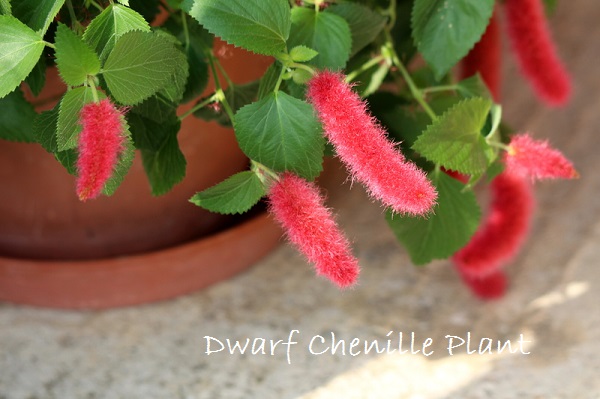 Give this beauty the sunlight it craves and enjoy irresistible blooms. Photo © Hecos255
This is a dwarf variety that stays small and doesn't need pruning. It's naturally bushy, so you don't have to pinch its growing tips to get it to branch out.
Shed some light. Bright light is essential to getting this plant to bloom. Dwarf Chenille blooms most heavily summer through fall. If it doesn't bloom much, move it to where it will get direct morning sun and/or indirect afternoon sun from a south- or west-facing window.
Deadhead flowers. Pinch off flowers as soon as they start to fade. Deadheading will encourage many more blooms.
Keep it well-watered and fertilized during the growing season. This tropical houseplant also appreciates high humidity. You can place the pot on a tray of wet pebbles to raise the humidity around it. Or use a cool-mist room humidifier near Dwarf Chenille Plant.
Raising the humidity also helps to prevent spider mites from invading. Watch out for these pests, especially in winter when indoor air tends to get dry. Dull-looking, speckled leaves and webbing are the first tell-tale signs of an infestation.
Repot in spring only when it has outgrown its container. Use a pot with drainage holes to prevent soggy soil.
I can understand why Dwarf Chenille Plant would appeal to cats, who may be tempted to play with its tassel-like blooms. However this member of the Euphorbia family is known for its poisonous plants, so it's a good idea to keep it away from pets.
Display Tip
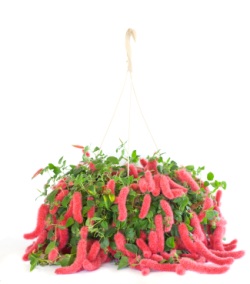
Place this unusual house plant on a pedestal stand or pot it in a hanging basket to show off those eye-catching fuzzy blooms.
Dwarf Chenille Plant Care Tips
Origin: Java and New Guinea
Height: Up to 1 ft (30 cm)
Light: Bright indirect light in summer; 4 hours direct sun per day in winter. Plants won't bloom without lots of sunlight.
Water: Keep soil evenly moist. Do not let it dry out. Give this plant plenty of water in summer. It's a good idea to check the soil moisture every 2-3 days when the plant is growing and blooming. Reduce water during the winter months, when growth is slower.
Humidity: Aim to maintain moderate to high, 50-60% relative humidity year-round. It's a good idea to use a humidity monitor rather than guess. Closed-up homes and central heating can make indoor air extremely dry in winter. The most efficient way to boost humidity for tropical plants is to use a cool-mist room humidifier.
Temperature: Average to warm 65-85°F/18-29°C year-round
Soil: Good-quality, all-purpose potting mix.
Fertilizer: Feed every 2 weeks spring and summer with a high-phosphorus liquid fertilizer diluted by half.
Propagation: Easy to propagate from stem cuttings. Take 3 in (8 cm) stem cuttings in spring and root in equal parts all-purpose potting mix and perlite. Keep cuttings in indirect sunlight and maintain an even 75°F/24°C until cuttings are rooted. It's a good idea to use a seedling heat mat to ensure constant warmth day and night.
More to Explore


-
Ficus Triangularis 'Variegata' is Gorgeous and Easy-to-Grow Indoors
Jan 29, 26 10:56 AM
 Variegated Ficus triangularis makes an eye-catching houseplant. It's long-lived and low-maintenance, too. Find out how to water, repot, fertilize and more.
 -
Growing Cyclamen Plant Indoors: How to Care for These Florist Flowers
Jan 22, 26 03:06 PM
 Florist Cyclamen plant has silver-and-green, heart-shaped leaves and a bounty of beautiful blooms. Get tips for growing cyclamen house plant.
 -
Blue Star Fern Care to Make Your Houseplant Thrive
Jan 16, 26 10:36 AM
 Get Blue Star Fern care and discover how to make this tropical houseplant thrive. Find out how much light, water, and fertilizer it wants year-round.