How to Grow African Violet Plants
Dependable bloomers, African violet plants top any list of favorite flowering houseplants. And it's no wonder. No other indoor flowering plant can match African violets ability to bloom for months on end. With this guide, you'll discover how to water, fertilize, repot, and make these Saintpaulia hybrids flower.
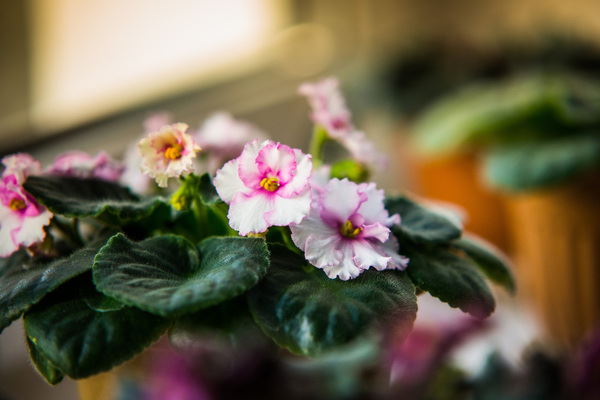 With countless varieties to choose from, it's easy to see why African violets are irresistible.
Get to Know African Violets
Dainty African violets form a low-growing rosette of dark-green, rounded leaves. Flowers rise above the leaves on fleshy stems and are available in a range of colors from white, pink or red, to all shades of violet-blue and purple, as well as bicolors.
These popular flowers are easy to find in nurseries and florist shops. You'll find many more varieties available if you order African violets online.
Thousands of Saintpaulia cultivars have been introduced, providing us with some spectacular new choices. Flowers may be single, double, edged with white, or have large, frilly petals. There are also trailing, miniature and micro varieties. Choose the one you like. Looking for minis? 'Little Delight' is a miniature hybrid with white blooms edged in purple. Petite 'Love Bug' has crimson semi-double flowers.
Find a spot for them that provides bright, indirect light and you'll enjoy living bouquets for months on end. Give your African violet at least 10 hours of bright, indirect light each day for more blooming power.
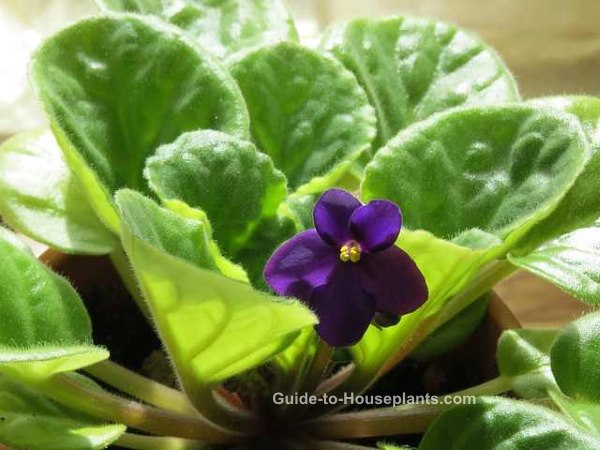 Given enough light, you can expect African violet plants to bloom almost year-round.
Caring for African Violet Plants Indoors
They can be damaged by overwatering, cold drafts, or harsh summer sun, but otherwise caring for African violets is easy. Keeping the soil moist, giving it plenty of bright, indirect light, and regular feedings will help it to stay healthy and blooming.
Brown leaves? Older leaves will shrivel and turn brown. This is normal. Cut them off because they can attract fungus.
Wondering whether to repot...or not? African violet plants prefer to be slightly pot-bound, and bloom best this way, so repotting is usually needed only to refresh the soil. As a rule of thumb, African violet pots should be about half as wide as the plant.
Careful with that water! Avoid getting the velvety leaves of African violets wet. Cold water, especially, will leave spots on the leaves and they won't come off. If the leaves need to be cleaned, brush them gently with a soft, dry brush, such as a small paintbrush.
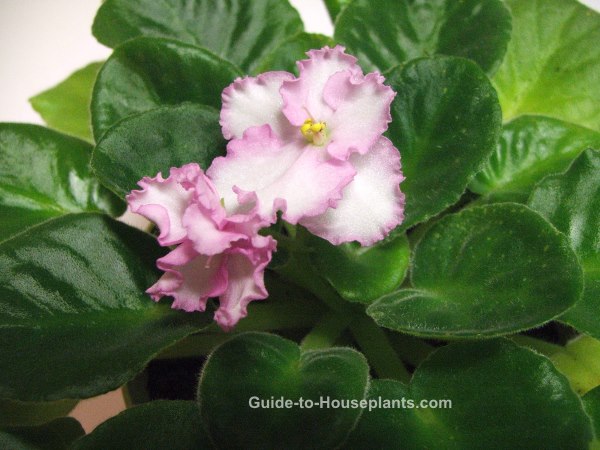 Easy care and endless varieties make African Violets ever-popular to grow as house plants.
No blooms? Your plant probably isn't getting enough light. In the short days of winter, put it under an artificial light to coax more flowers. There's no reason why African violet plants won't bloom all year.
Deadhead spent flowers. You'll get more blooms this way. Also remove any dead or damaged leaves to keep it healthy and looking its finest.
Gray, fluffy mold is likely botrytis, a fungus that thrives on dead flowers or leaves, especially in humid conditions. Cut off any affected areas and treat right away. Keeping your plant warm, with good air circulation will help prevent it.
Watch for pests. Fungus gnats are attracted to wet, peaty potting mixes. They look like tiny, black flies. However, they don't fly -- you'll see them crawling, or perhaps hopping on the soil. Treat any infestation right away because they multiply quickly and may move on to your other indoor plants. Another pest to watch for is white, cottony mealybugs. Find out how to identify and get rid of mealybugs. Tiny, black thrips are perhaps the most difficult to find and eliminate. They suck sap from stems, leaves, and flowers, causing distorted growth and curled leaves.
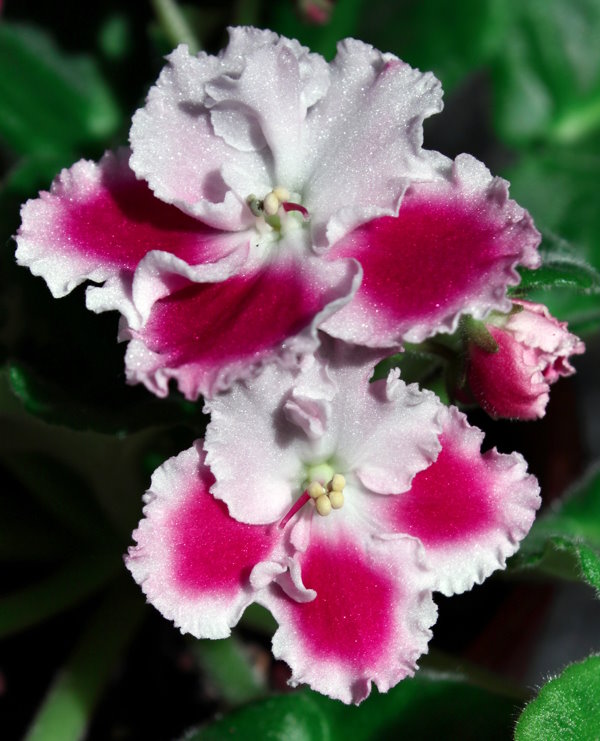 Stunning new African Violet hybrids offer lots of captivating choices.
African Violet Plant Care Tips
Origin: Eastern Africa
Height: Up to 6 in (15 cm)
Light: Needs bright light to bloom. Leggy stems and no blooms indicate that it's not getting enough light. Some direct sun in winter is fine, but strong summer sun will scorch African violet leaves. Turn the plant each week to ensure even exposure to sunlight; otherwise, plants will lean toward the light source. It grows well under fluorescent light. Set the plants about 6 inches (15 cm) beneath lights for 14 to 16 hours a day. African violets may also fail to bloom if they don't get 8 hours of darkness each night. (These beauties need their rest, too.)
Water: Keep soil evenly moist, but not soggy. It's best to water plant from the bottom to avoid stem rot. Bottom-watering helps to prevent getting water on the leaves, which causes brown spots. Remember to always use room-temperature water when watering your houseplants because cold water is a shock to them.
Humidity: Moderate to high; aim for 50-60% relative humidity. It's a good idea to use a humidity gauge rather than guess because levels can drop drastically in winter. Set plant on a tray of wet pebbles or use a cool-mist room humidifier to raise the humidity around it. Do not mist because the water can damage leaves.
Temperature: Average room temperatures 65-75°F/18-24°C year-round.
Soil: Peat moss-based with added perlite and/or vermiculite, such as African violet potting mix.
Fertilizer: Feed every 2 weeks with a high-phosphorus fertilizer, such as African violet fertilizer.
Propagation: Take 1-2 in (2.5-5 cm) leaf stem cuttings in spring or summer. Dip the cut end in water, then dip it in rooting hormone powder. Poke the stem into moist potting mix. Use your fingers to firm the mix around the stem so that it stands up. Enclose the pot in a glass cloche or terrarium to hold in moisture. Keep the cutting out of direct sunlight. Leaves should develop roots in about a month, and you should see plantlets form from the base of the cutting in about another month after that.
More to Explore


-
Blue Star Fern Care to Make Your Houseplant Thrive
Jan 16, 26 10:36 AM
 Get Blue Star Fern care and discover how to make this tropical houseplant thrive. Find out how much light, water, and fertilizer it wants year-round.
 -
Rosary Vine Plant Care - How to Grow Ceropegia Woodii Houseplant
Jan 13, 26 10:59 AM
 Rosary Vine has charming heart-shaped leaves that grow along slender stems. Ceropegia woodii is a captivating houseplant and is easy to grow.
 -
Chinese Evergreen Plant Care: How to Grow Aglaonema Indoors
Jan 12, 26 01:16 PM
Chinese Evergreen plant is easy to grow, and tolerant of low light and low humidity. Find out when to water, how to fertilize and why you shouldn't prune this plant.


