Powdery Mildew on House Plants
How to Identify Powdery Mildew Disease
It's a fungus that looks like white powdery patches on leaves, stems, or flowers that later turns grayish brown. These are the usual causes:
- High humidity
- Low light
- Poor air circulation
The powdery patches are fungal spores and they multiply rapidly. You'll usually notice the mildew first on the top surface of older leaves. By this time, the disease has been inside the plant a week or longer. The affected leaves may turn yellow or brown and eventually fall off.
African violets and begonias are often susceptible because they prefer the high humidity that is ideal for fungus growth.
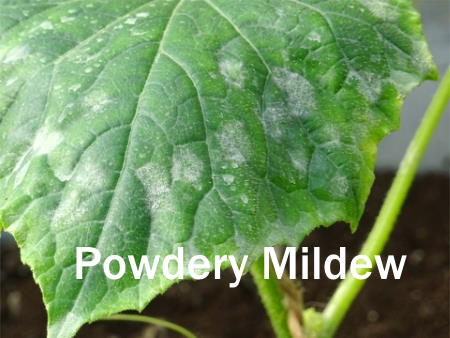 Dry, white powdery patches on leaves are a symptom of powdery mildew.
Treatment for Powdery Mildew
The easiest way to control the spread of this fungus is to cut off all the affected leaves and give the plant more light.
Move the plant away from other plants to improve air circulation and to prevent the spread of fungal spores.
You've probably heard of using baking soda as a treatment. This works well for prevention, but does not cure an affected plant. If you want to try this solution as a preventative measure, spray the plant with a mixture of 1 tablespoon of baking soda dissolved in 1 gallon of water.


Safer Brand 3-in-1 Ready-to-Use Garden Spray
Spray the affected areas with fungicide made for house plants. The 3-in-1 Insecticide/Fungicide/Miticide (shown here) works to control powdery mildew and other types of fungus and insects. Read the label carefully and follow the manufacturer's directions for use.
Prevention Tips
- Keep it clean. Fungal spores can easily be carried on your hands and tools from one plant to another. It's a good idea to wash your hands and sterilize your tools after contact with affected plants to avoid spreading the fungus around.
- Water your house plants regularly. Plants are most affected by this disease when roots dry out and foliage is moist.
- Give them air. Although tropical houseplants need humidity to thrive, some need more air circulation than others. Plants that are epiphytes in the wild (they grow on trees), such as bromeliads, tillandsias, and most orchids, are healthier with good air flow. And as I mentioned before, thickly leafed African violets and begonias are also susceptible to fungus. A low-speed fan can help, if powdery mildew becomes a problem.
Recent Articles


-
Anthurium Plant Care - How to Grow Anthurium andraeanum Indoors
Apr 17, 24 12:25 PM
 Anthurium plant is one of the world's most exotic tropical flowers. Discover Anthurium growing tips: sunlight, fertilizer, watering, repotting.
 -
Goldfish Plant Care Tips: How to Grow Columnea Gloriosa Indoors
Apr 15, 24 10:38 AM
 Goldfish Plant care for this amazing house plant. Find out how to get the most blooms, plus how and when to prune, water and fertilize.
 -
Inch Plant Care: Grow Trailing Tradescantia Zebrina as a Houseplant
Apr 15, 24 10:25 AM
 Get the keys to Inch Plant care with this easy guide. Glistening purple and green striped leaves make this stunning trailing plant ever-popular.