Care for Piggyback Plant
Botanical Name: Tolmiea menziesii
In its native habitat, piggyback plant grows as a groundcover in the shady woodland forests along the northern Pacific coastline. Give it a cool spot with high humidity and you'll find it's easy to grow.
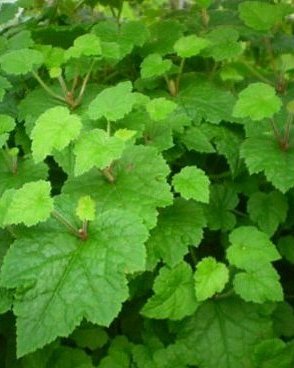
The lush, green, hairy leaves on this evergreen are mapleleaf-shaped with scalloped edges. Decorative leaf patterns form an eye-catching mound of foliage. But the captivating feature is the way it makes new plants. Mature leaves grow new plantlets from the top of its petioles (the place where the leaf attaches to the stem). This unusual growth habit lends the common names, piggyback plant, youth-on-age and thousand mothers.
Plantlets weigh down the stems, giving this plant a trailing habit. Show off its trailing, piggyback leaves by planting it in a hanging basket.
Will it bloom? Spikes of tubular flowers sometimes appear in summer, but rarely on plants grown indoors.
Piggyback plant is in the Saxifragaceae family, along with Strawberry Begonia. What these two have in common besides attractive foliage is a trailing habit and their ability to produce plantlets that are easily propagated.
Is piggyback plant poisonous? No. According to the ASPCA, Tolmiea menziesii is non-toxic to cats and dogs.
A few varieties are available. 'Variegata' is mottled with creamy yellow. 'Taff's Gold' is a popular variety heavily splashed with yellow.
Growing Tips for Piggyback Plant
Repot in spring every couple years or when the roots fill the pot. Its creeping roots spread so use a wide pot. Just be sure to use one with drainage holes to prevent overwatering. The hairs on the leaves and stems can cause minor skin irritation. It's a good idea to wear gloves when repotting.
Brown, crispy leaves? Dry-looking foliage can be caused by a few things:
- Direct sun can cause brown scorch marks on the leaves. Keep plant out of strong summer sun.
- Low humidity is likely the culprit. Crispy, shriveled leaves are a sign that the air is too dry. Mist with water, use a pebble tray or a room humidifier to raise the humidity around the plant. High temperatures can send the humidity plummeting, so daily misting may be needed in the summer.
- Dry soil could also cause dry leaves. Aim to keep the soil evenly moist.
Pinch your plant back to keep it from getting leggy. Giving it bright light will help it to grow lush and full.
Piggyback Plant Care Tips
Origin: West Coast of North America (From Alaska to Northern California)
Height: Up to 1 ft (30 cm)
Light: Moderate to bright light, but no direct sun. Pale leaves and long spaces between leaves indicate the plant is not getting enough sunlight.
Water: Water regularly throughout the growing season, keeping the soil evenly moist, but not soggy. Water less in winter, when growth is slower.
Humidity: Aim to maintain at least 50% relative humidity around the plant. Mist foliage with room-temperature water or use a pebble tray to raise humidity. Brown leaf tips are a sign that the air is too dry.
Temperature: Cool to average (50-75°F/10-24°C)
Soil: Peat moss-based potting mix
Fertilizer: Feed monthly in spring and summer with a balanced water-soluble fertilizer.
Propagation: Take leaf cuttings with plantlets and set them in a pot, allowing the base of the plantlets to touch the soil. Roots will form quickly from this junction. After the parent leaf has dried up, cut it away from the newly rooted plantlet.
Recent Articles


-
Begonia Care: Grow Tuberous Begonia Hybrids Indoors
Apr 23, 24 12:10 PM
 Get begonia care and grow Reiger begonia and other tuberous hybrids as houseplants. Discover how to get the most flowers and rebloom your begonia.
 -
Campanula Flowers Make Gorgeous Houseplants
Apr 20, 24 01:07 PM
 Campanula flowers look best spilling over a tall pot. Get tips for growing campanulas indoors, how to get the most blooms, when to repot, and more.
 -
Anthurium Plant Care - How to Grow Anthurium andraeanum Indoors
Apr 17, 24 12:25 PM
 Anthurium plant is one of the world's most exotic tropical flowers. Discover Anthurium growing tips: sunlight, fertilizer, watering, repotting.