How to Grow Basil Indoors
Botanical Name: Ocimum basilicum
The "secret" to how to grow basil is to give it full sun and moist, but well-drained soil. Growing basil in the winter can be challenging because of its preference for hot, humid, sunny days. It is much easier to meet its needs in the summer, unless you use a grow light.
Get to Know Basil Plant
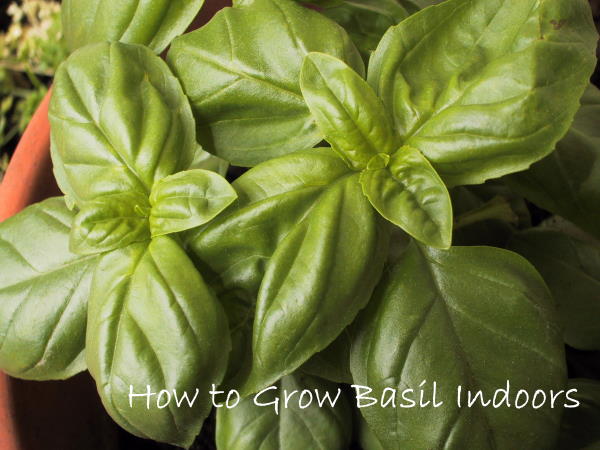
Sweet basil plant is a tender annual. The species is a vigorous, fast-growing herb. Its oval, bright-green leaves are 1-2 inches long with deeply indented veins.
Tall spikes of small, white flowers appear at the stem tips in late summer. Pinch them off as soon as you see them to prolong the plant's life and to preserve its flavor.
More than 150 varieties are available, but the basics for how to grow basil are the same for all. Sweet basil plant, shown here, is the most widely grown for use in fresh tomato sauces and in pesto. Purple basil makes wonderful flavored vinegar. Many scented basil plants, such as cinnamon, lemon and licorice are used in fruit salads and for garnish.
Varieties of Basil
Many varieties are widely available. Choose what you like -- the care tips for how to grow basil are the same.
O. basilicum 'Minimum', known as Greek basil, is a dwarf cultivar that reaches 1-1 1/2 ft tall. Its leaves are just 1/2 inch long. Other tiny-leafed cultivars are 'Green Bouquet' and 'Spicy Globe' -- they're even smaller, reaching only 1 ft tall.
'Purpureum' has striking purple foliage and lavender-pink flowers.
'Purple Ruffles' basil is similar in color, but its leaves have curly, toothed edges. It makes an attractive plant.
Pinch growing tips to encourage branching. If you eat basil regularly, you're automatically doing a big part of basil maintenance -- pruning. You'll keep your herb well-groomed and producing tasty, tender new leaves.
Harvesting and Storing Basil Leaves
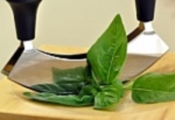
Harvest leaves from mature plants every week. Harvesting basil leaves first thing in the morning will capture their best flavor. The best leaves are from young stems that have yet to flower.
Don't worry about wasting a bountiful supply -- freezing basil is a great way of preserving basil for cooking. Gently wash leaves, then pat dry. Chop fresh leaves by hand or in the food processor. By chopping them finely, they'll be the right size for adding to soups, sauces or other recipes. Store them in freezer bags.
Drying basil is a convenient way for storing it. Don't know how to dry basil? It's easy. Cut off stems and tie in 1 inch bunches with string, leaving a loop for hanging. Hang them upside down and allow them to dry naturally in a cool, dry, dark place.
How to Grow Basil Indoors
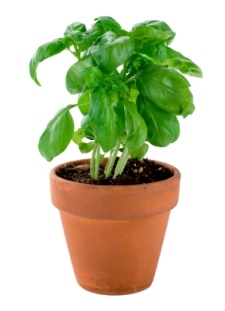
Origin: India, southern Asia
Height: 1-2 ft (30-60 cm)
Light: Full sun. At least 6 hours of direct sun per day. Turn plant for even growth because it will tend to grow toward the light source. Want to know how to grow basil with an indoor grow light? Just keep the light 6 in (15 cm) above the plant and leave it on for 14 hours a day. This is the equivalent of 6 hours of sun. Turn the light off at night -- plants need a rest, too.
Water: Water thoroughly then allow top 1 in (2.5 cm) of the soil to dry out between waterings.
Humidity: Moderate room (around 40% relative humidity) or higher. Mist the leaves with room-temperature water or put the plant on a tray of wet pebbles. Kitchens are typically higher in humidity than other rooms of the house and ideal for keeping your herbs nearby for cooking.
Temperature: Average room temperatures 65-75°F/18-24°C. If you move your plant outside for the summer, don't worry -- it can take the heat. Just bring your basil indoors when temps drop below 50°F at night.
Soil: Well-drained potting mix, such as cactus mix. Or, use 2 parts all-purpose potting mix with 1 part sharp sand or perlite.
Fertilizer: Feed every 2 weeks with a high-nitrogen liquid fertilizer diluted by half. If you're growing basil from seed, start fertilizing after seedlings are a month old.
Propagation: Seed. Basil seeds can be collected from the flowers in autumn. These tiny, black seeds are nestled in the flowers. Shake them loose and save them to plant in spring. You can sow basil seeds anytime indoors under a grow light. To sow seeds, barely cover them with potting medium and keep moist. Maintain a 70°F temperature for the seeds to germinate. You'll see seedlings emerge in about 5-10 days after sowing.
Recent Articles


-
Goldfish Plant Care Tips: How to Grow Columnea Gloriosa Indoors
Apr 15, 24 10:38 AM
 Goldfish Plant care for this amazing house plant. Find out how to get the most blooms, plus how and when to prune, water and fertilize.
 -
Inch Plant Care: Grow Trailing Tradescantia Zebrina as a Houseplant
Apr 15, 24 10:25 AM
 Get the keys to Inch Plant care with this easy guide. Glistening purple and green striped leaves make this stunning trailing plant ever-popular.
 -
Hydrangea Care: Guide for Growing Hydrangeas Indoors
Apr 13, 24 11:42 AM
 Hydrangea care guide. Discover how to grow hydrangeas as house plants: repotting, pruning, reblooming, propagating, fertilizing, care and maintenance.