Arrowhead Plant
Botanical Name: Syngonium podophyllum
Arrowhead Plant is a member of the Araceae family -- along with the philodendron -- and is just as easy to care for. Give it bright light and lightly moist soil, and you'll find that it's otherwise low-maintenance.
Commercial growers have made big improvements to this beautiful foliage plant in recent years, giving it a better resistance to disease. And that's not all. Today's plants offer more leaf colors with heavy variegation and a compact growth habit, adding to its appeal.
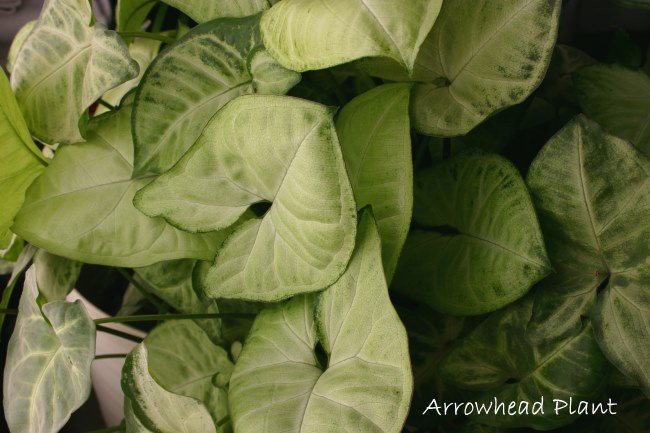 Arrowhead plant is a classic houseplant. Beautiful and easy-care, it's no wonder.
Get to Know Arrowhead Plant
As a young plant, its leaves start out heart-shaped, then gradually become arrowhead shaped as it matures. S. podophyllum dark-green leaves have silvery white or cream variegation, making this a decorative and popular house plant.
There are many named varieties. Choose a plant based on the color and size you want. Among the most popular are 'Butterfly' that features deep-green leaves with creamy white veins...'Pixie' is a compact cultivar with small leaves...'Imperial White' is stunning with green leaves marbled with white. One new colorful cultivar is 'Neon Robusta', flushed with pink.
Display arrowhead plant alongside a group of other foliage plants or add it to a dish garden. Small plants mix well with compact peace lilies and English ivy because they require similar care.
Arrowhead Plant Problems, Answers and Houseplant Helps
Stake it up. Young plants form clusters of upright stems, with climbing stems developing later. Use a moss stick to support older stems, giving aerial roots something to hold onto. Or, if you want to keep it compact...
Prune it back. To keep arrowhead plant bushy and full, prune out the older, climbing stems as they grow. Cut them back in early summer and you can propagate the stem tip cuttings.
Dropped or shriveled leaves? Arrowheads are always growing new leaves, but may drop them if the plant gets too dry. Cut off dry, shriveled leaves and aim to keep the potting mix lightly moist at all times.
Brown, shriveled leaves could indicate chemical damage. Arrowhead plant's thin, delicate leaves are sensitive to leafshine products, pesticides and pollutants. If leaves are dusty, clean them with a fine spray of room-temperature water. Before using any pesticide, read the label to be sure it is safe to use on this plant.
Repot in spring every couple years, or when the plant becomes root-bound. Use a container with drainage holes. If you want to dress up a plain pot, slip it into a cachepot. I put pebbles in the bottom of cachepots to hold the inside pot above the drainage water. As the water evaporates, it adds humidity to the air around your arrowhead plant -- and it will love the humidity.
Something bugging your plant? When you water your houseplants, look them over for pests. A few to watch for: Scale insects, small, round and brown, they are easy to spot along the stems and undersides of leaves. Mealybugs look like white specks of cotton and tend to group on plant stems. Among the most dreaded houseplant pests are spider mites; they leave fine webbing between leaves and stems, cause leaf damage, and are difficult to remove. Don't use insecticide sprays because Syngonium is sensitive to chemicals, which damage the foliage. If your Arrowhead plant is badly infested, get rid of it.
Is arrowhead plant poisonous? Yes. Syngonium podophyllum has sap that contains calcium oxalate crystals and is toxic to pets and people and can cause skin irritation. I recommend wearing gloves when handling this plant or washing your hands thoroughly afterward.
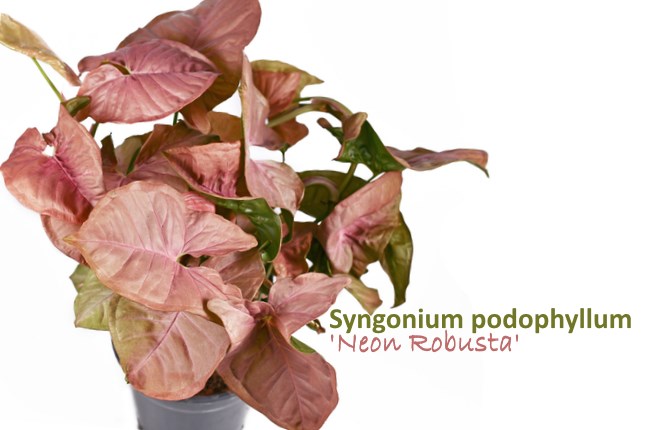 Some popular new cultivars are beautifully splashed with pink. Photo © Monikabaumbach
Arrowhead Plant Care Tips
Origin: South America
Height: Newer compact varieties grow to 2 ft (60 cm), some varieties climb to 4 ft (1.2 m) or more.
Light: Bright light, but no direct sun. Syngonium podophyllum can tolerate low light, but the leaves may lose their variegation. Turn pot in front of window regularly for even growth.
Water: Keep the potting mix moist in summer, allowing the surface to dry out before watering again. Water less often in winter, letting the top half of the potting mix dry out.
Humidity: Try to maintain 40-50% relative humidity around your plant. Brown leaf tips can be caused by dry air. Take a look at these easy ways to increase the humidity for your tropical plants.
Temperature: Warm room temperatures (65-80°F/18-27°C).
Soil: Peat-moss based potting mix with added perlite and/or vermiculite for good drainage, such as African violet mix.
Fertilizer: Feed every 2 weeks from spring through fall with a balanced house plant fertilizer diluted to half the normal strength. In winter, feed monthly.
Propagation: Take 3-4 in (7.5-10 cm) stem tip cuttings early in summer. For best results, dip the cut end in rooting hormone powder then stand the cutting in a pot of perlite or a half-half mix of vermiculite and peat moss. Keep the cuttings out of sunlight and maintain the humidity around them by covering the pot with a plastic bag. Cuttings should root in about a month.
More to Explore


-
Fiddle Leaf Fig House Plants: How to Grow Ficus Lyrata Indoors
Nov 26, 25 11:41 AM
 Fiddle Leaf Fig tree gets its name from its big, fiddle-shaped leaves. Find out how to grow this beautiful ficus tree indoors and keep your houseplant thriving.
 -
Florist Chrysanthemum Care: How to Grow Chrysanthemum morifolium
Nov 23, 25 10:25 AM
 Florist Chrysanthemum varieties all have big, beautiful flowers crowning a mass of dark-green foliage. Find out how to grow indoor mums and keep them blooming.
 -
Growing Cyclamen Plant Indoors: How to Care for These Florist Flowers
Nov 20, 25 10:24 AM
 Florist Cyclamen plant has silver-and-green, heart-shaped leaves and a bounty of beautiful blooms. Get tips for growing cyclamen house plant.